Thermal stabilisation of structures, the working area and machine components: the evolution of a system developed to achieve unrivalled accuracy.
A machining operation may begin in the morning and, in longer cycles, continue for several weeks. During that time, the shop floor temperature changes and the machine generates heat as it operates. Yet the tolerances required on the workpiece remain the same.
Meeting those tolerances means understanding how these variations affect machine geometry. This need led Gruppo Parpas to develop its own system for the thermal stabilisation of machine structures.
That project gave rise to dedicated solutions for thermal control of the RAM and working area, progressively extending coverage to more areas of the machine. Gruppo Parpas continues its research and development in this direction, aiming to introduce new solutions that improve accuracy and deliver tangible benefits to customers’ manufacturing processes.
The starting point: machine tool accuracy
Understanding Gruppo Parpas’ approach to thermal control starts with a physical principle: temperature can affect machine structures and, consequently, machine geometry.
Thermal deformation involves more than simple, uniform expansion. Different structural elements absorb, transfer and dissipate heat at different rates and in different ways, depending on their materials, geometry and connections. Even components with the same coefficient of thermal expansion can therefore deform differently if they reach different temperatures or heat up and cool down unevenly.
Environmental conditions add to the heat generated during operation: day-to-night temperature fluctuations, seasonal changes and differences between the production facilities where machines are installed.
These conditions can cause uneven deformation, changing the relative position of the tool and workpiece and introducing machining errors. Describing and correcting these effects requires more than a simple calculation of linear expansion: it requires an understanding of temperature distribution within the machine and how its effects evolve over time.
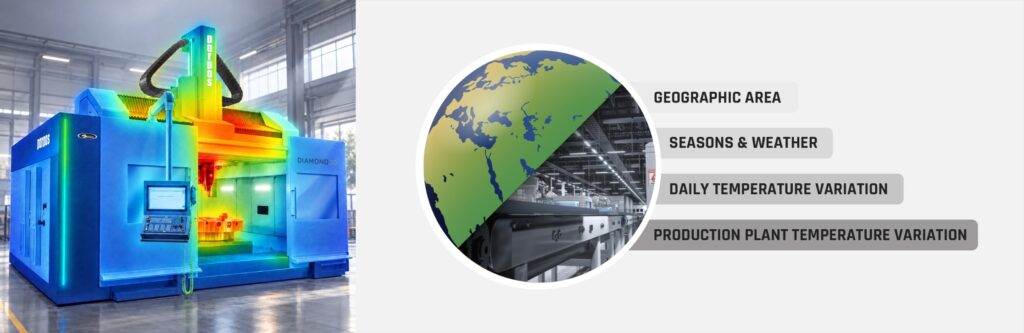
Accuracy also depends on temperature distribution within the machine: uneven temperature changes can alter structural geometry and the relative position of the tool and workpiece.
Continuously developing targeted solutions for consistently high accuracy
Mechanical structures support and guide machine movements. Their stiffness is essential to limit deformation under cutting loads; thermal control helps preserve their geometry as temperatures change. Both aspects must be addressed during design.
The system developed by Gruppo Parpas combines thermal insulation of the structures, the distribution of temperature-controlled air and active temperature control in the relevant areas. These measures work together to limit environmental influence and manage temperature differences between machine components.
Experience gained with this system has led to dedicated solutions for the crossbeam, saddle and RAM, which contribute to tool movement and positioning throughout the working volume.
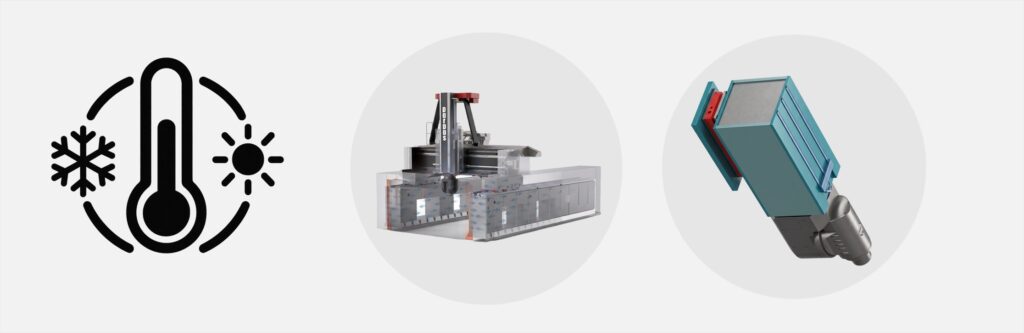
Each serves a specific function and requires thermal management that accounts for its construction, heat sources and interaction with connected components. Local measures are therefore integrated with the system dedicated to the structures, progressively extending control to more areas of the machine.
Thermal management is thus part of the design from the outset and is developed through coordinated solutions, with the aim of limiting geometric variations during the cycle and maintaining a more stable tool position and orientation throughout the working volume.
Thermal control of machine structures
In gantry machining centres, the geometric stability of the structures contributes to accurate tool positioning and orientation throughout the working area.
Gruppo Parpas’ solution combines temperature management of the structures with thermal insulation from the external environment. The aim is to limit the influence of ambient temperature variations and contain deformation that could alter machine geometry.
This control helps preserve tool positioning accuracy even during extended machining operations.
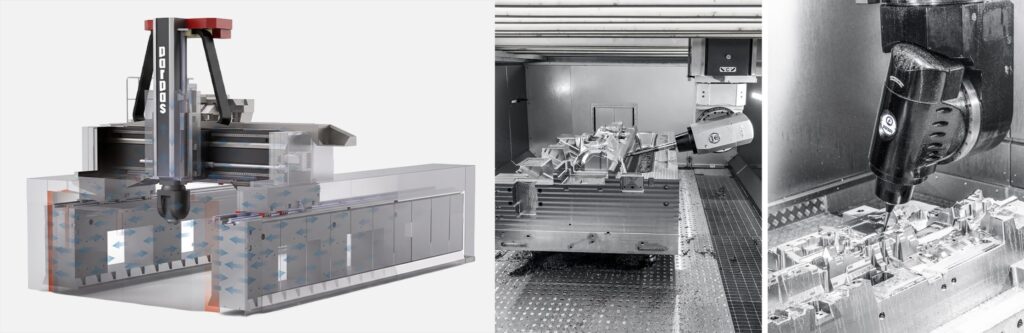
Thermal management of the RAM
The RAM, which incorporates the fourth axis and the head, operates at different extensions and under varying load conditions. Its behaviour affects tool position and also requires dedicated thermal control.
For this component, Gruppo Parpas has developed a recirculating-liquid temperature control system, designed to stabilise its temperature and maintain thermal balance with the rest of the machine.
Thermal control of the RAM is integrated with thermal management of the crossbeam and saddle, taking into account both the needs of individual assemblies and their interaction. The aim is to limit relative deformation between these elements, helping preserve the perpendicularity of the linear axes and tool positioning accuracy.
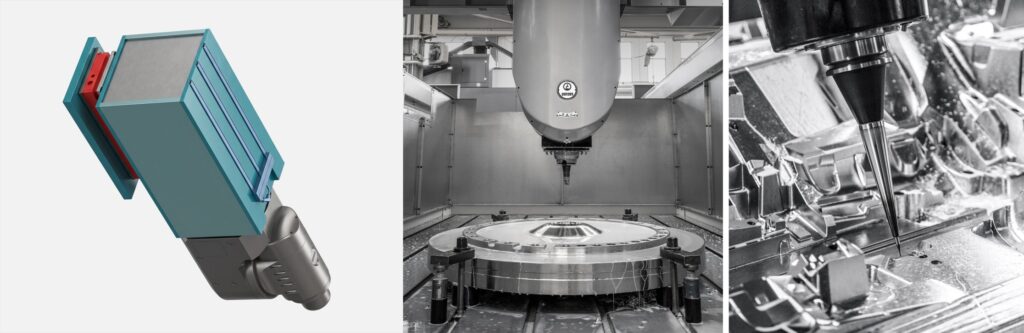
Building on the thermal stabilisation of machine structures, Gruppo Parpas has developed dedicated solutions for moving assemblies, coordinating measures to limit deformation and preserve tool positioning accuracy.
Extending control to the working area
Gruppo Parpas’ development programme also encompasses thermal control of the working area, extending coverage to the zone where the machine, workpiece and fixtures operate together.
The thermal conditions of the workpiece and workholding fixtures contribute to machining accuracy. Managing these conditions is particularly important during extended cycles and when machining large components, especially when the material has a high coefficient of thermal expansion. In aerospace applications, these requirements may be combined with thin-walled geometries, which also demand attention to mechanical stability during cutting.
Solutions dedicated to the working area complement those applied to the structures and moving assemblies. The result is comprehensive thermal control, with each solution addressing a specific process requirement.
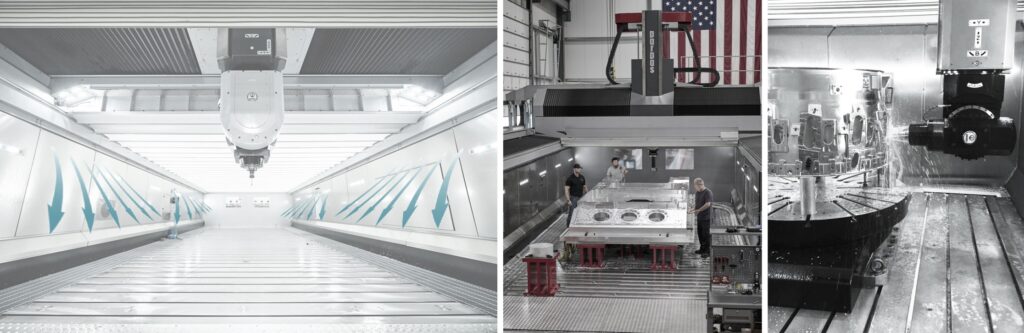
Extending thermal control to the working area also means considering the conditions in which the workpiece and fixtures operate, connecting machine design with process requirements.
An evolving system for greater accuracy
From targeted cooling of heat-generating components such as motors to the thermal stabilisation of structures and thermal control of the crossbeam, RAM and working area, Gruppo Parpas has progressively developed and implemented its technologies across different machine components.
The value of this evolution lies in the integration of the solutions: managing heat sources and limiting deformation in the various elements helps improve machining accuracy and the repeatability of results throughout the production cycle.
Machining duration, workpiece size, required tolerances and shop floor temperature variations guide the selection and coordination of these measures. Thermal control must deliver a benefit to the machined workpiece under actual production conditions.
This connection between research, design and machining results continues to guide Gruppo Parpas in developing its solutions for accuracy.
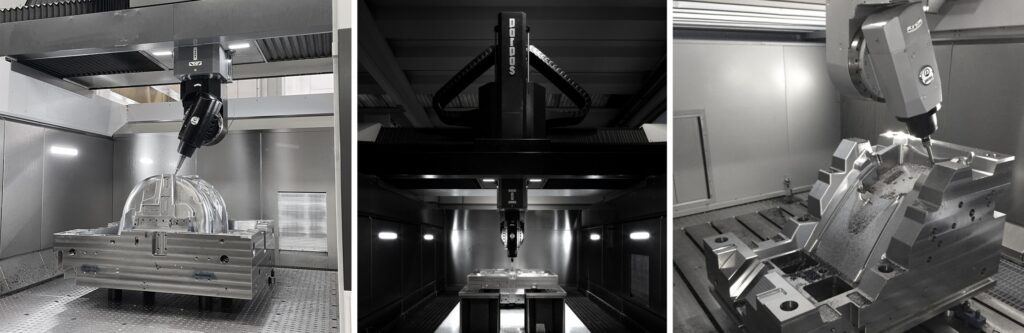
The evolution of Gruppo Parpas’ comprehensive thermal control has a single objective: extreme machine accuracy under actual production conditions.
For further information on Gruppo Parpas, please contact Leader CNC Technologies.
{Article Disclaimer: This article has been written and supplied by Riccardo Broggio, Gruppo Parpas. The content and technical information are provided by the manufacturer and are reproduced by Leader CNC Technologies for information purposes.}